The Possibilities Within The Creole Corridor


The Possibilities Within The Creole Corridor
Look at the calendar for the last week of October 2026 and tell me this isn't a trade fair waiting to happen. Friday to Sunday, October 23 to 25, Dominica's World Creole Music Festival takes over Windsor Park, with Machel Montano, Tabou Combo and Asa Bantan on the bill. On Sunday the 25th, Saint Lucia celebrates Jounen Kwéyòl. Wednesday the 28th is International Creole Day, observed since 1983. And from October 26 to 30, the City of Boston (yes, Boston) hosts its first-ever Creole Week.
Same language family. Same week. Same madras. Completely separate silos.
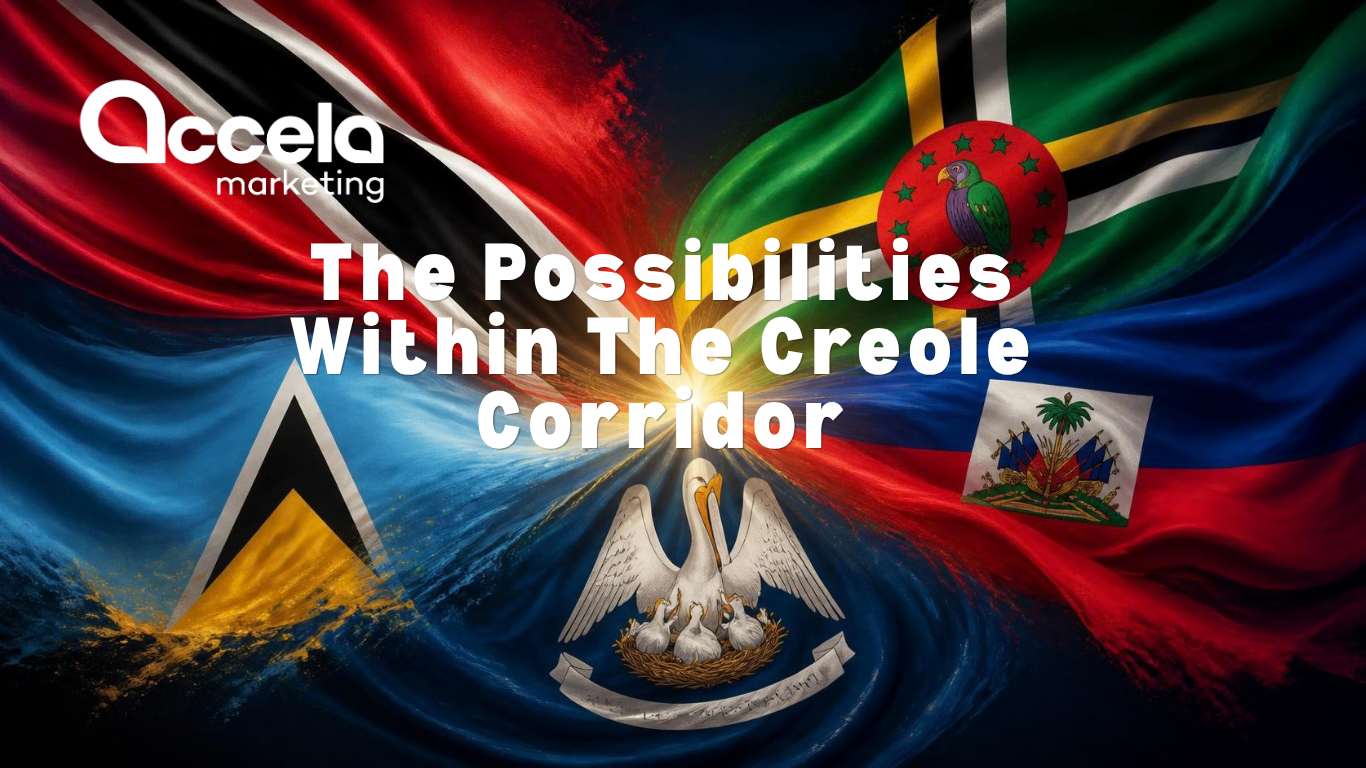
The Creole-heritage world is a real market with shared roots: Haiti's roughly 13 million Kreyòl speakers, the Kwéyòl islands of Saint Lucia, Dominica, Martinique and Guadeloupe, the Patois keepers of Paramin in Trinidad, the Kouri-Vini revivalists of Louisiana, and the diaspora in Miami, Boston and Montreal. They share food, music, fashion and a very particular sense of humour. What they don't share is a business plan. And the door has never been this open.
The politics just caught up with the culture
Martinique became an associate member of CARICOM effective June 2026 and took its seat for the first time at the Heads of Government meeting, hosted, fittingly, in Saint Lucia in July. In May, a Martinican logistics delegation was in Castries working on a 15-product trade project with Saint Lucia; Minister Ernest Hilaire urged both sides to "focus on the low-hanging fruit" such as the movement of goods and interoperability of systems. The ferries already run: FRS Express des Îles links Guadeloupe, Dominica, Martinique and Saint Lucia, with Martinique to Saint Lucia in about 90 minutes. And the EU's Interreg Caraïbes programme, managed by the Guadeloupe Region, exists precisely to fund cooperation between the French Caribbean territories and more than 40 Caribbean states and territories.
So the infrastructure for Creole collaboration isn't a dream. It's a ferry timetable and a funding call.
The music crossed first. The money never followed.
Culture has been running this corridor for decades without a memo. Bouyon was born in Dominica in the late 1980s and spread through collaborations between Dominican and Guadeloupean artists singing in their shared Antillean Creole. Even its name comes from the kitchen: bouyon is the Creole soup where a little bit of everything goes in. Haiti's konpa, launched in 1955 by Nemours Jean-Baptiste and carried worldwide by bands like Tabou Combo, was recognised by UNESCO as Intangible Cultural Heritage in December 2025; former culture minister Emmelie Prophète called it "the collective memory of the nation."
The demand is proven. The 2025 World Creole Music Festival drew more than 42,000 patrons, and Dominica logged 10,540 visitor arrivals in the nine days before it, a 48% jump and the highest pre-festival figure on record, with fans coming from Martinique, Guadeloupe and Saint Lucia. That is a Creole tourism product proving itself in real time, mostly on one island's steam.
Same madras, different passport
Fashion may be the corridor's most underused asset. Madras is the cloth of the wob dwiyet in Saint Lucia and Dominica and of festival dress in Martinique and Guadeloupe, and the headwrap runs a thread straight to Louisiana. There, the 1786 tignon law ordered free women of colour to cover their hair; they answered by turning the headwrap intended to shame them, into what historian Virginia Gould calls "a mark of distinction." Picture a pan-Creole madras capsule collection telling that story. Now tell me it wouldn't sell in Boston, Paris and Castries at the same time.
Food tells the same story. Louisiana's gumbo braids African okra with Choctaw filé, a close cousin of every callaloo pot in the islands. Paramin, Trinidad's hillside French-Creole village, grows the chive and thyme that season many a Trini pot, and still celebrates Mass in Patois on Carnival Sunday.14 Filmmakers are already mining the seam: Cassandra Joseph's documentary Mayòk (Bitter Cassava) follows her Paramin grandmother making cassava flour, while Louisiana Public Broadcasting's Kouri-Vini 101 teaches a Louisiana Creole that by recent estimates has fewer than 10,000 speakers.16
Five moves to build the corridor
1. Package a multi-destination "Creole Immersion Experience." The World Creole Music Festival and Jounen Kwéyòl share a weekend, and the ferries link Roseau, Fort-de-France and Castries. Tour operators, hotels and airlines can sell a two-island Creole pass. Start planning 2027 in January, not September.
2. Co-produce, and let Europe help pay. Film, festival and fashion collaborations with partners in Martinique and Guadeloupe fit squarely inside Interreg Caraïbes priorities. A Creole food series or a madras capsule is exactly the kind of cross-border project these funds exist for.
3. Follow the diaspora to Boston, Miami and Montreal. When a major US city launches a Creole Week, it's telling you Creole identity is now a civic and commercial audience. Caribbean tourism boards and exporters should be in that room.
4. Formalise the festival circuit. Saint Lucia already hosts contingents from French Guiana, Martinique and Grenada for Creole Heritage Month.17 Turn those exchanges into a shared circuit with shared sponsors.
5. Mind the power gap. Haiti has most of the speakers; Louisiana and Paramin have the most fragile languages. Good collaboration lifts the small ones instead of just borrowing the big one's name.
The Creole world already shares a language family, a plate and a plaid. It just hasn't shared a spreadsheet. Whoever writes that first joint business plan, whether a festival, a fashion house, an airline or an agency, won't be joining a trend. They'll be building a bloc.
Sources
WIC News, "Dominica's World Creole Music Festival announces 2026 lineup"
Caribbean eMagazine, "Saint Lucia Celebrates Creole Heritage Month 2026"
City of Boston, "Creole Week"
Wikipedia, "Haitian Creole"
Caribbean Journal, "Martinique Officially Joins CARICOM" (July 2026)
The Voice St. Lucia, "Strengthening Trade With Martinique — A Gateway to EU Exports" (May 2026)
FRS Express des Îles, "Ferry tickets to Saint Lucia"
Interreg Caraïbes, "The Program Interreg Caribbean 2021-2027"
Wikipedia, "Bouyon music"
Malay Mail / AFP, "Haiti's beloved compas music set for UNESCO Intangible Cultural Heritage status" (Dec 2025)
Caribbean Journal, "Dominica's World Creole Music Festival Draws Record Crowds" (Nov 2025)
Wikipedia, "Tignon law"
Kreol Magazine, "Louisiana – The Beating Heart of the Creole World"
Wikipedia, "Paramin"
Trinidad Express, "T&T's Patois now a dying language"
Louisiana Public Broadcasting, "Kouri-Vini 101"; speaker estimate from Wikipedia, "Louisiana Creole"
St. Lucia Times, "Jounen Kwéyòl: A revolutionary journey" (2025)


%201.svg)


